Publisher
How to Advertise in Telegram Channels
Master Telegram advertising in 2025 with our comprehensive guide. Learn targeting strategies, budget optimization, ad formats, and advanced techniques to maximize your...
Contents
Understanding the Telegram Advertising LandscapeTypes of Telegram Advertising MethodsStep-by-Step Implementation GuideCost Analysis and Budgeting StrategiesAdvanced Targeting and Audience SelectionPerformance Measurement and AnalyticsCommon Mistakes and How to Avoid ThemReal-World Case Studies and Success StoriesPublisher pages should connect inventory, format fit, quality controls, and payout context.
Avoid sacrificing user experience for short-term monetisation.
Use native Telegram moments where the ad action feels expected.
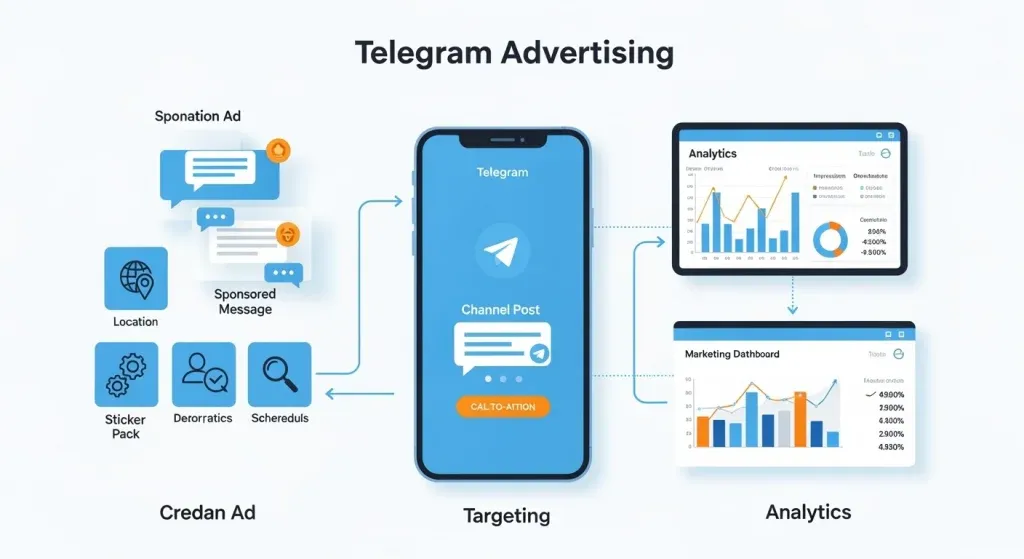
Understanding the Telegram Advertising Landscape
Telegram advertising has emerged as one of the most effective digital marketing strategies for businesses seeking to reach highly engaged audiences. With over 800 million active users worldwide, learning how to advertise in telegram channels can transform your marketing efforts and deliver exceptional return on investment. This comprehensive guide covers everything from basic telegram ads setup to advanced targeting strategies, providing actionable insights for businesses of all sizes.
The telegram advertising landscape offers unique opportunities that traditional social media platforms cannot match. Unlike Facebook or Instagram, telegram marketing focuses on direct communication with audiences who actively choose to engage with your content. This creates a premium environment where advertising on telegram delivers higher engagement rates and more qualified leads.
The telegram ecosystem presents multiple advertising opportunities that extend far beyond simple channel posts. Understanding these fundamentals is crucial for developing effective telegram channel promotion strategies that align with your business objectives.
Telegram’s advertising platform has evolved significantly since its introduction. The platform now supports sophisticated targeting mechanisms, detailed analytics, and various ad formats designed to maximize engagement. Recent statistics show that telegram users spend an average of 3.4 hours daily on the platform, making it an invaluable channel for sustained brand exposure.
The platform’s unique architecture allows businesses to reach audiences through multiple touchpoints. Public channels serve as content hubs, while groups facilitate community building and direct customer interaction. This multi-layered approach enables comprehensive marketing campaigns that nurture prospects throughout the entire customer journey.
“Telegram advertising success comes from understanding that users choose to be there. Unlike other platforms where ads interrupt the experience, telegram users actively seek valuable content. This creates unprecedented opportunities for brands that provide genuine value.”
Several factors make telegram marketing particularly attractive for businesses:
Higher engagement rates: Telegram posts typically achieve 40-60% higher engagement compared to traditional social media
Types of Telegram Advertising Methods
Direct audience access: Messages reach subscribers directly without algorithm interference
Cost-effective reach: Lower advertising costs compared to Facebook and Google Ads
Global accessibility: Available in regions where other platforms face restrictions
Privacy-focused audience: Users value privacy, creating trust opportunities for ethical brands
Successful telegram ads campaigns utilize multiple advertising methods to maximize reach and effectiveness. Understanding each approach helps businesses create comprehensive marketing strategies.
The official telegram advertising platform represents the most sophisticated option for large-scale campaigns. This system allows businesses to place sponsored messages directly within public channels, reaching audiences with minimal disruption to their browsing experience.
Sponsored message placement: Ads appear between regular posts in public channels
Advanced targeting options: Geographic, linguistic, and device-based targeting
Step-by-Step Implementation Guide
Comprehensive analytics: Detailed performance metrics and audience insights
Scalable budgeting: Flexible spending controls for campaigns of any size
The platform operates on a CPM (cost per thousand impressions) model, with minimum budgets starting at approximately $2,000. This makes it primarily suitable for established businesses with substantial marketing budgets.
Partnering directly with channel administrators offers more personalized advertising opportunities. This approach involves negotiating placement terms directly with channel owners, often resulting in more authentic content integration.
Telegram influencer marketing leverages popular channel administrators and content creators to promote products or services. This method particularly excels in building trust and credibility with target audiences.
Effective influencer partnerships typically involve:
Authentic product integration rather than obvious advertisements
Long-term relationships that build sustained brand awareness
Cost Analysis and Budgeting Strategies
Implementing successful telegram channel promotion requires systematic planning and execution. This section provides detailed instructions for launching your first telegram advertising campaign.
Before creating any advertisements, establish clear objectives and target audience definitions. Research shows that campaigns with specific goals achieve 3x better performance than general awareness campaigns.
Define campaign objectives: Brand awareness, lead generation, sales conversion, or community building
Identify target audience: Demographics, interests, geographic location, and behavioral patterns
Set budget parameters: Total campaign budget, daily spending limits, and cost-per-acquisition targets
Choose success metrics: Engagement rate, click-through rate, conversion rate, or subscriber growth
Develop content strategy: Message themes, visual elements, and call-to-action approaches
For businesses seeking more accessible entry points into Telegram advertising, specialized platforms offer streamlined solutions with lower minimum budgets and user-friendly interfaces designed specifically for Telegram marketing campaigns. These platforms bridge the gap between high-budget official advertising and direct channel partnerships, providing professional-grade tools and analytics at more affordable price points.
Advanced Targeting and Audience Selection
The choice between official advertising and specialized platforms depends on your budget constraints, campaign scale, and desired level of control. While the official platform offers maximum reach and sophisticated targeting, alternative solutions provide excellent opportunities for businesses to test Telegram advertising effectiveness before scaling to larger investments.
Creating compelling telegram advertisements requires understanding the platform’s unique communication style. Successful ads feel like natural extensions of the channel’s existing content rather than obvious promotional messages.
Important: Telegram users expect valuable, informative content. Advertisements that provide useful information or entertainment perform significantly better than purely promotional messages.
Writing concise, engaging headlines that capture attention immediately
Using high-quality visuals that align with your brand aesthetic
Including clear call-to-action statements that guide user behavior
Maintaining consistent brand voice across all advertising materials
Testing multiple content variations to optimize performance
Performance Measurement and Analytics
Understanding telegram advertising costs enables businesses to allocate marketing budgets effectively and maximize return on investment. Costs vary significantly based on targeting specificity, audience size, and campaign duration.
Telegram advertising utilizes several pricing models depending on the chosen platform and campaign type. The most common approaches include:
CPM (Cost Per Thousand Impressions): The official platform charges based on ad views, with rates typically ranging from $0.50 to $5.00 per thousand impressions. Premium targeting options and competitive niches command higher rates.
Fixed placement fees: Direct channel partnerships often involve flat fees for post placement. Rates depend on channel size, engagement quality, and content integration requirements.
Performance-based pricing: Some arrangements tie compensation to specific outcomes like clicks, leads, or sales. This model reduces risk but typically requires higher per-conversion payments.
Effective telegram advertising budgets allocate resources across multiple campaign elements:
60% – Media placement: Direct advertising costs including platform fees and channel partnerships
25% – Content creation: Visual design, copywriting, and video production expenses
Common Mistakes and How to Avoid Them
10% – Analytics and optimization: Tracking tools and campaign management resources
5% – Testing and experimentation: Budget for trying new approaches and platforms
Maximizing return on investment requires continuous monitoring and optimization of campaign performance. Successful advertisers implement systematic approaches to improve efficiency over time.
A/B testing content variations: Test different headlines, images, and call-to-action statements
Audience segmentation: Create targeted campaigns for specific demographic groups
Timing optimization: Schedule posts during peak audience activity periods
Cross-platform integration: Coordinate telegram campaigns with other marketing channels
Precise audience targeting distinguishes successful telegram marketing campaigns from generic promotional efforts. The platform offers sophisticated targeting capabilities that enable highly specific audience selection.
Real-World Case Studies and Success Stories
Location-based targeting allows businesses to focus advertising spend on regions with the highest potential return. This approach proves particularly valuable for businesses with geographic limitations or regional market focus.
Country-level targeting: Restrict campaigns to specific nations or regions
City-based selection: Target major metropolitan areas or local markets
Language preferences: Reach users based on their telegram language settings
Device targeting: Optimize campaigns for mobile or desktop users
Understanding audience interests enables more effective message customization and higher engagement rates. While telegram maintains user privacy, certain behavioral indicators help optimize campaign targeting.
Channel subscription patterns that indicate user interests
Time-based activity patterns for optimal message timing
Advanced Optimization Techniques
Comprehensive performance measurement ensures telegram advertising campaigns deliver measurable business value. Tracking the right metrics enables data-driven optimization and strategic decision-making.
Successful telegram marketers monitor multiple performance indicators to understand campaign effectiveness:
Reach and impressions: Total audience exposure and message visibility
Engagement rates: Likes, shares, comments, and click-through rates
Conversion tracking: Leads generated, sales completed, and goal achievements
Cost efficiency: Cost per click, cost per lead, and return on ad spend
Audience growth: New subscribers, channel growth, and retention rates
Industry benchmarks suggest that well-optimized telegram campaigns achieve engagement rates 2-3x higher than traditional social media advertising.
Future Trends in Telegram Advertising
Sophisticated measurement systems provide deeper insights into campaign performance and audience behavior. These tools enable more precise optimization and strategic planning.
UTM parameter implementation for traffic source tracking
Custom dashboard creation for real-time performance monitoring
Cohort analysis for understanding user behavior patterns
Learning from common telegram advertising mistakes helps businesses avoid costly errors and achieve better results faster. These insights come from analyzing hundreds of campaigns across various industries.
The most frequent errors involve content that fails to resonate with telegram’s unique audience expectations:
Apply this inside Telegram
Use the guide to choose a Telegram moment, then connect the campaign or publisher path in AdsGram.